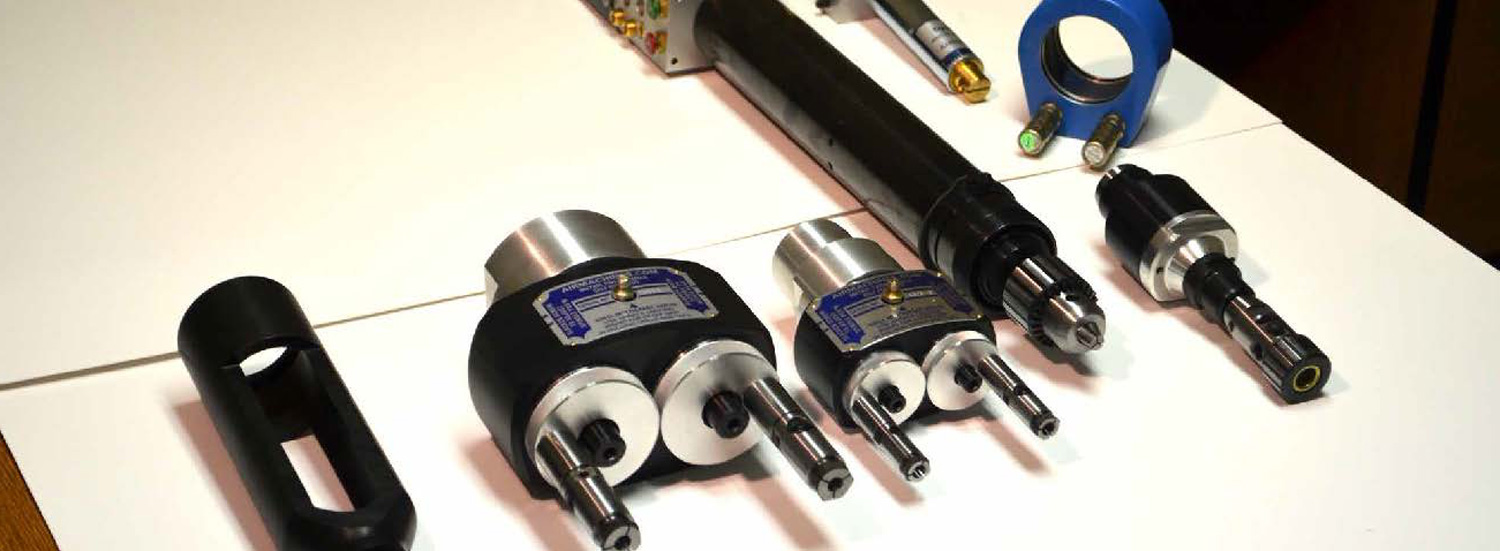
An Introduction to Pneumatic and Electric Self Feed Units
A Versatile Unit to Meet a Wide Range of Needs:
Airmachines’ Self Feed Unit combines a motor with a double acting, self lubricating cylinder into a clean line package. The motor can be powered by air or electricity. With the control system and a variety of attachments, the unit can be used for drilling, tapping, screwdriving and nutrunning in many automated operations. Contact us today to learn more about our self feeding drills.
Single or Double Feed to the Motor and Cylinder*:
Incorporated into the design of the tool, this feature enables both the motor and the cylinder to be fed with air through one connection or separately through two connections which can have different air pressures – an advantage when drilling or tapping small holes with self feeding drills.
*Applies to pneumatic units only.
Adjustable Stroke Length:
The unit can be set for any stroke from 5/16″ (8mm) to 3″ (75mm) to provide for deep hole drilling applications, while providing a greater clearance for fixtures and indexing tables, among other things. The stroke is adjusted by means of an adjustment screw. An indicator on the upper guard makes set up quick and easy.
Double Acting Air Cylinder to Maintain Set Thrust:
The main advantage delivered by this method of applying thrust is that the set thrust can be maintained throughout the full 3″ (75mm) stroke. This provides greatly improved cycle times as the drill bit will cut more quickly without burring. It will also enable the feed rate to be accurately controlled, thus prolonging small drill life and preventing tap breakage. The control head incorporates valves that control the rate of feed and retraction of the cylinder, as well as porting for dwell control. For manual control, start and stop push buttons are provided, while for partial or fully automatic control, check valves are supplied.
Cycle Signals:
The cycle completion signal can be obtained as a negative signal from the connection on the back of the feed tube. The pressure is removed when the unit has fully retracted. The cycle signal port on the feed tube provides a positive signal as soon as the unit moves forward.
Flexible Mounting Options:
The different mounting brackets make it possible to permanently mount the unit into a dedicated machine for long run production. Alternatively it can be quickly and easily changed for various set ups for short run production.
Generously Outfitted with Many Attachments and Accessories Standard:
The self-feed units come with many attachments as standard features. These include a drill chuck up to 3/8″ (10mm) capacity, 3/8″ or 1/2″ square drives for nutrunners, a ball clutch for screwdrivers, and a collets for tappers. Both single and multiple spindle tapping heads along with multiple spindle drilling heads are available. The units also include a number of standard accessories, such as isolation fittings for remote advance and retract, upper guard with depth indicator, chuck key with drill unit, and collet wrenches with tapping unit.
Optional Accessories for Special Needs:
In addition to the standard accessories, you can take advantage of a number of optional accessories for self-feed units. These include several kits — hydraulic feed control, peck feed control, bottom limit sensing, dwell control and return limit sensing. Other optional accessories are an exhaust collector, bushing mount nose housing, swarf exclusion kit, skip control units and mounting brackets and clamps. A positive signal air valve or electric limit switch that mounts on the guard can also be supplied. It will give a positive signal when the unit is fully retracted in the home position. Air flow restrictors of 10 cfm and 15 cfm (5 l/s and 7 l/s ) can also be supplied as optional extras if the application involved does not require the utilization of the full motor power. This means a savings in compressed air consumption.
What Is a Self Feeding Drill?
Self feeding drills are advanced drilling tools that use an automated feed mechanism to move the drill bit into the workpiece without constant manual force from the operator. This automated movement is powered by air or electric motors, allowing for consistent pressure and feed rate throughout the drilling cycle. At Airmachines.com, Inc, our self feed drills are designed for precision, durability, and seamless integration into both manual and automated production environments.
These drills are especially valuable in high-volume manufacturing settings where speed, consistency, and accuracy are essential. By controlling the feed automatically, a self feeding drill helps reduce operator fatigue, increase productivity, and minimize the risk of errors that can occur with manual drilling methods. Our models are built to handle a wide range of materials, including metals, plastics, and composites, making them a versatile solution for multiple industries.
In addition to their efficiency, a self feeding drill is designed with robust construction and advanced control systems, ensuring they maintain reliable performance even in demanding production conditions. This makes them an excellent investment for companies seeking to improve throughput while maintaining consistent quality standards.
How a Self Feeding Drill Work
The core function of a self feeding drill revolves around a powered feed system that advances and retracts the drill bit with precision control. In pneumatic models, compressed air drives both the motor and the feed cylinder, allowing operators to adjust feed rates, stroke lengths, and thrust levels for each specific application. Electric-powered versions use similar controls to achieve consistent and repeatable performance.
Our self feeding drills feature adjustable stroke lengths, enabling deep hole drilling or short, precise cuts, depending on production requirements. The built-in control valves manage the feed rate and retraction speed, while optional dwell control allows for a pause at the end of the drilling cycle to ensure clean, accurate holes. This level of control not only improves accuracy but also prolongs tool life by preventing excessive wear and breakage.
For automation-ready production lines, a self feeding drill can be integrated into existing fixtures, CNC setups, or robotic systems. Their flexible mounting options and compatibility with a range of accessories make them ideal for custom applications. Whether operating as part of a fully automated system or as a semi-automated station, these drills deliver the same level of precision and efficiency every time.
Advantages of Using a Self Feeding Drill
Investing in a self feeding drill from Airmachines.com, Inc offers multiple benefits to manufacturers across industries. One of the most significant advantages is productivity. Automated feeding eliminates the need for constant manual pressure, allowing operators to oversee multiple machines at once or focus on quality control tasks. This efficiency translates to faster cycle times, higher throughput, and ultimately, greater profitability.
Another key advantage is improved consistency. Manual drilling can lead to variations in hole depth, diameter, and finish due to human error or fatigue. Self feeding drills maintain uniform feed pressure and speed, ensuring every hole meets exact specifications. This level of precision reduces scrap rates, lowers rework costs, and helps maintain tight quality control in production runs.
Finally, safety is enhanced when using a self feeding drill. The automated feed reduces the risk of repetitive strain injuries for operators and minimizes potential hazards by controlling the drilling process more consistently.